




|
 Coming soon, the convenience of ordering online–specify lab services; choose your print sizes, papers, mounting options and more.  Find out what’s happening with AutumnColor clients and the in the world of photography, in general. Click here. 
Newsletter archive: Click here. |
Featured Artist: Bill GalleryCorporate photography and photojournalism seldom overlap, but they do in the photography of Bill Gallery. As a self-styled "corporate photojournalist," Gallery has traveled extensively documenting the workplace—from boardroom to factory floor—for clients ranging from Apple and Accenture to Time Warner and the Washington Post Company, from Merck and Mass General Hospital, to PriceWaterhouseCoopers and Polaroid. For at least a decade he shot some 400 slideshows exclusively in color for corporate clients, then spent years shooting photography for annual reports, almost always in black and white. He shot so much black and white for a time, that art directors forgot he knew how to shoot color, even though, he says, "I can shoot the pants off color." None of these hundreds of assignments and many thousands of photos was what Gallery thought he would be doing when he graduated the Rhode Island School of Design (RISD) in the early 1970's. Introduced to photography as a kid when his mother slipped an Instamatic into his bag for a stay at summer camp, Gallery showed signs of a "good eye for design" early on. His interest in photography grew steadily through high school as he learned first to develop black and white film, then to print. Faced with college decisions, Gallery thought filmmaking and living in New York City sounded like fun, so he attended NYU film school. However he quickly learned that, "the language of motion pictures wasn't my native language, still pictures were," and transferred to RISD as a result. At RISD, Gallery began learning the art and craft of photography in earnest, and refining his eye while studying with Harry Callahan and Aaron Siskind. RISD at the time was an art school, not a photography school, Gallery explains. "It was 100% fine art oriented. Consequently you saw a lot of art. There was no mention of photography careers other than making art. And color photography was almost never spoken of." It was plentiful exposure to art, both at RISD and in his home while growing up–both his mother and grandmother were artists—which Gallery credits for his finely honed sense of design and composition. "The more art you see, the more you understand about what you are seeing," he explains. Learning to draw was another key element in his education, "even though it was the closest thing to getting a root canal. It turned out perhaps to be the most useful academic training I received," Gallery adds. When it came time to graduate, "to me photography was all personal and all black and white," he says. He and his classmates, "all took a vow that we would never sell out. However, when we graduated most of us had to break that vow because we had rent to pay." A chance job with Polaroid launched his unanticipated career as a corporate photojournalist. Gallery was given the assignment of going around the world to photograph the many diverse ways people used the company's instant film. On that assignment he photographed a remarkable range of subjects, from neurosurgeons at work in Stockholm, an insurance adjuster evaluating a wrecked car in Rio, and Ansel Adams in his Carmel studio. The Polaroid job, plus his film school experience, led him into the corporate slide show niche. Gallery became the go-to guy for corporate documentary photos, he says. It wasn't what he envisioned at NYU or RISD. But he found somewhat to his surprise that, "it was a great education and I was having fun doing it. I also realized that my strength was in observing rather than directing. And I had to learn to work with available light and color transparency film, which was a real challenge." Using available light and approaching assignments as a photojournalist soon became Gallery's signature fly-on-the-wall style. For an assignment early in his career, "I tried posing models and tried studio lighting and the results were dead, there was no spontaneity," he recalls. "I don't pre-visualize. I shoot only available light and everything is unposed. An art director once called me a street photographer in the office and factory." Thoroughly immersed in traditional, silver-based photography and printing, when digital photography began to emerge, one of Gallery's first thoughts was, "did we ask for this? With so much invested in traditional methods, digital just didn't make sense at first, particularly its initial inability to render in low light," he says. But there came a point when it was a question of going digital or going home, Gallery says. He began shooting digital in 2004 and today shoots exclusively digital using a Canon 5D Mark III. "Now I think digital is great and I don't look back. It's a better recording medium than film ever was," he says," although there is a personal touch with a hand-made analog print that isn't there in digital." It was scans from AutumnColor that helped Gallery to closely examine and make a critical evaluation of the relative merits of film and digital capture. His decades of analog photography resulted in 24 running feet of black and white negatives in binders. Practically overnight, he found that he had to digitalize at least the best one or two hundred images to continue presenting them to prospective clients. Based on a recommendation from a fellow professional, Gallery asked AutumnColor to begin scanning those best negatives. Subsequently, seeing those scans became a defining moment for him. "I had taken great pride in my printing ability in the darkroom," he says. "But after seeing that first set of scans of 35mm Tri-X and Plus-X negatives from AutumnColor, I realized I was seeing much more in the digital version than I ever saw in the analog version or a paper print." Those scans truly replace film, he says, because with them, he has a better rendition of the image than analog could ever have given him. Another plus to digital technology is the precise control it offers photographers. In the darkroom, Gallery could dodge and burn and apply other techniques that made his prints look special, he says. But with digital, he can "get under the hood of the image" and using curves "change the infrastructure of the grey scale." That first set of scans helped to complete Gallery's transition to digital and started a relationship with AutumnColor that continues today. "I have 100% confidence in Mark's ability," says Gallery. "He can look at a piece of film and know what can be done with it. He's a master with a capital 'M.' And if Mark doesn't do those scans, eventually the pictures won't exist." |
All photos this page © Bill Gallery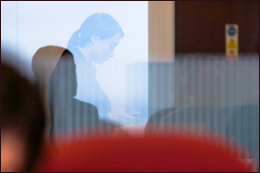 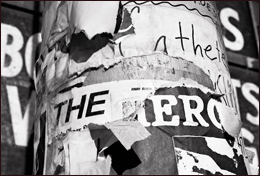 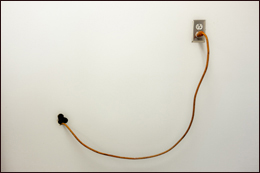 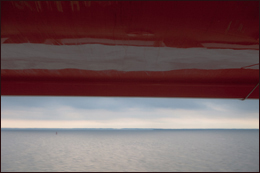 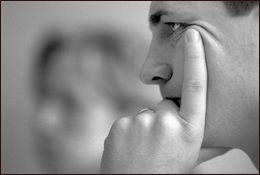 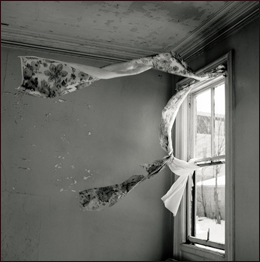  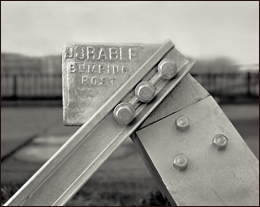 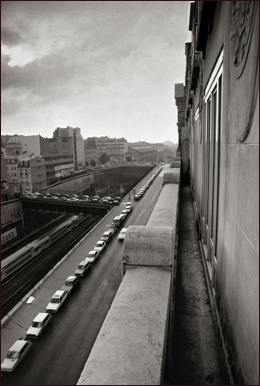 |

| |||
Copyright ©  AutumnColor Digital Imaging AutumnColor Digital Imaging |70 Webster Street|Worcester, MA 01603|Toll Free: 800-533-5050|Fax: 508-757-2216 |70 Webster Street|Worcester, MA 01603|Toll Free: 800-533-5050|Fax: 508-757-2216
|
|||